


Solar PV System Fire Safety Audit
Is Your Solar PV System Safe – or Is It Simply Working?
A solar photovoltaic (PV) system can be generating electricity perfectly normally while still containing potentially serious electrical and fire-safety defects.
Poor connections, unsuitable or mismatched connectors, damaged cables, water ingress, inadequate cable management, incorrectly installed components and problems with isolation can potentially remain unnoticed during normal day-to-day operation.
That is why SJG Electrical has developed a specialist Solar PV System Fire Safety Audit for domestic, commercial, agricultural and industrial solar PV installations throughout Lincolnshire and Cambridgeshire.
Using specialist PV testing and diagnostic equipment, our electricians can inspect and test the installation to assess its electrical condition, identify potential fire risks and highlight defects that may require remedial action.
Your solar panels producing electricity does not necessarily mean your PV installation is electrically safe.

IMAGE TAKEN ON SITE BY SJG ELECTRICAL & SECURITY
For a homeowner, landlord, farmer or business owner, the important question therefore isn’t simply:
“Is my solar system working?”
It is:
“Is my solar PV system safe?”
Why Solar PV Fire Safety Is Becoming Increasingly Important
Thousands of solar PV systems have been installed across the UK over the past two decades.
The quality of those installations can vary considerably.
Some systems were installed to a very high standard by experienced and competent contractors. Others may have been installed using inappropriate components, poor workmanship or installation practices that would not be considered best practice today.
The original installer may also no longer be trading, leaving the property owner with little information about the installation or its condition.
At the same time, insurers and risk-management specialists are placing increasing emphasis on the inspection, maintenance and electrical safety of solar PV installations.
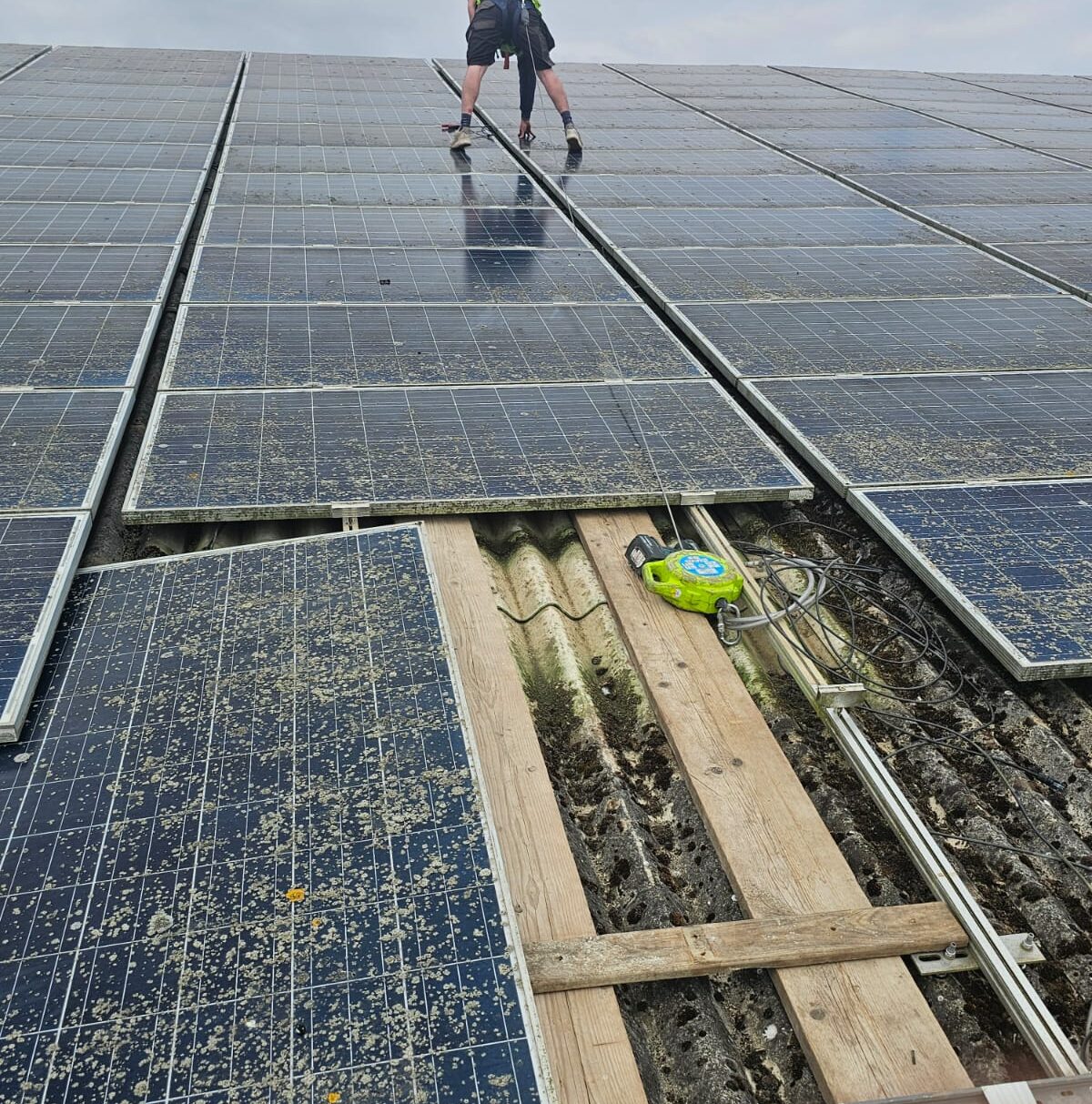
IMAGE TAKEN ON SITE BY SJG ELECTRICAL & SECURITY
A Working Solar PV System Can Still Have Dangerous Faults
One of the most important aspects of PV safety is understanding the difference between performance and electrical safety.
An inverter display or monitoring app may show that your system is producing electricity. You may see no error messages and your generation figures may appear completely normal.
That does not necessarily demonstrate that every part of the installation is safe.
A PV array contains numerous electrical connections, cables, connectors, isolators and other components. Problems can develop within these areas without immediately stopping electricity generation.
For example, a poor electrical connection may introduce additional resistance. That connection may continue conducting electricity while generating excessive heat.
Similarly, damaged cable insulation may not immediately stop the system working but could leave the installation vulnerable to insulation failure, moisture ingress or electrical faults.
Generation monitoring tells you what the system is producing. A PV safety audit investigates the condition of the electrical installation producing it.
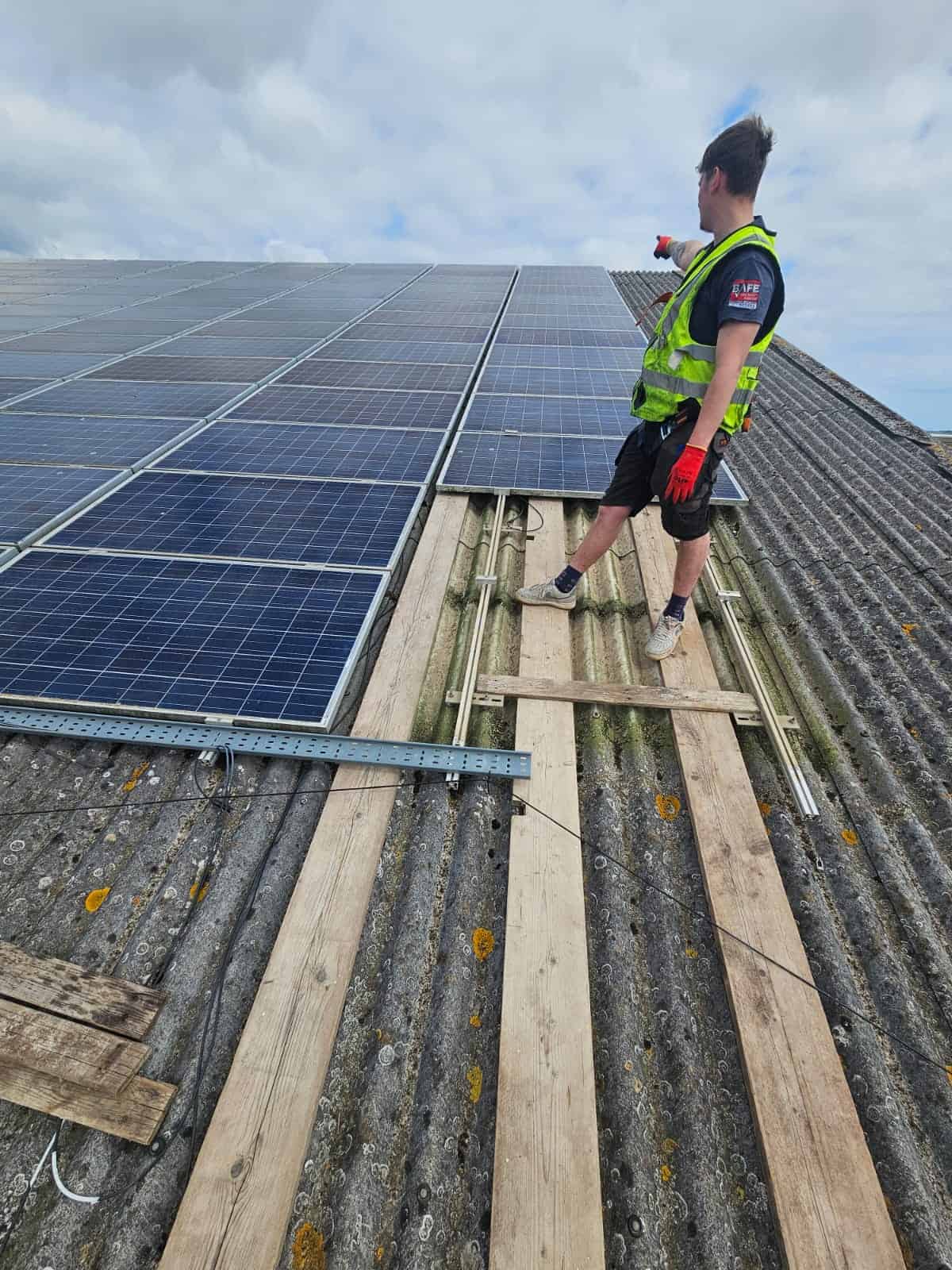
IMAGE TAKEN ON SITE BY SJG ELECTRICAL & SECURITY
Why Can Solar PV Systems Present a Fire Risk?
Solar PV systems operate differently from many conventional electrical circuits.
Solar panels generate DC electricity whenever sufficient light falls on them. This means parts of the DC installation can remain energised during daylight even if equipment elsewhere in the building has been switched off.
This makes correct design, installation, cable routing, connections and isolation particularly important.
Some defects may be visible. Others require specialist electrical testing and diagnostic equipment to identify.

Potential Solar PV problems can include:
- Poorly made or loose electrical connections
- Incorrect, incompatible or mismatched DC connectors
- Damaged or deteriorated connectors
- Water or moisture ingress
- Poorly terminated cables
- Cables rubbing against roofs, tiles, metalwork or other surfaces
- Cables inadequately supported beneath solar panels
- UV or weather-related deterioration
- Damaged cable insulation
- Incorrect cable specification
- Poor cable routing
- Inadequate electrical protection
- Defective or incorrectly installed DC isolators
- Inverter-related defects
- Signs of overheating
- Previous alterations or repairs completed incorrectly
- Inadequate system labelling
- Inadequate emergency isolation arrangements
- Components that are inappropriate for the installation or environment
Some defects may be visible. Others require specialist electrical testing and diagnostic equipment to identify.
Particular Attention to PV Connectors
DC connectors are a relatively small component within a solar PV system, but their correct selection, installation and termination are extremely important.
Problems can arise where connectors from different manufacturers or connector families have been mixed, where connectors have been poorly crimped or assembled, or where components have deteriorated or allowed moisture ingress.
A connection does not necessarily have to fail completely before it becomes a concern.
A compromised connection can potentially create increased electrical resistance and localised heating while the PV system continues generating.
The SJG Solar PV System Fire Safety Audit therefore considers the condition and suitability of accessible connections as an important part of assessing the installation.
Cable Condition and Cable Routing
Solar PV cabling can spend years exposed to demanding environmental conditions.
Depending upon the installation, cables may be subjected to sunlight, wind, rain, temperature changes, movement and contact with roof coverings or structural components.
Poor cable management can result in cables:
- Resting against abrasive surfaces
- Rubbing against roof tiles or metalwork
- Hanging unsupported beneath panels
- Being trapped or compressed
- Being exposed to standing water
- Being routed through inappropriate areas
- Becoming damaged through movement
- Suffering deterioration to their insulation
A cable may still carry electricity despite having suffered physical deterioration.
The audit therefore examines accessible PV cabling and its routing for evidence of damage, deterioration or installation practices that could compromise long-term electrical safety.
Water Ingress and Weather Exposure
PV systems are installed in environments that are continually exposed to the weather.
Connections, enclosures and cables therefore need to be appropriate for their location and correctly installed.
Water ingress can contribute to deterioration, corrosion, insulation problems and electrical faults.
Our inspection looks for evidence of inappropriate installation, damaged components and potential points at which moisture may compromise the electrical integrity of the PV system.
Can Your Solar PV System Be Safely Isolated?
This is an important consideration, particularly when assessing older or poorly documented installations.
Solar panels generate DC electricity when exposed to light. Switching off the main electricity supply to a property does not automatically stop the panels themselves from producing electricity.
A properly designed system therefore needs appropriate means of isolation, identification and safe shutdown in accordance with the design and applicable requirements of the installation.
The SJG audit examines the system’s isolation arrangements and identifies potential concerns.
This can be particularly important for commercial, agricultural and industrial premises where building owners, maintenance personnel and emergency responders need to understand the presence of a PV installation and how it can be appropriately isolated.
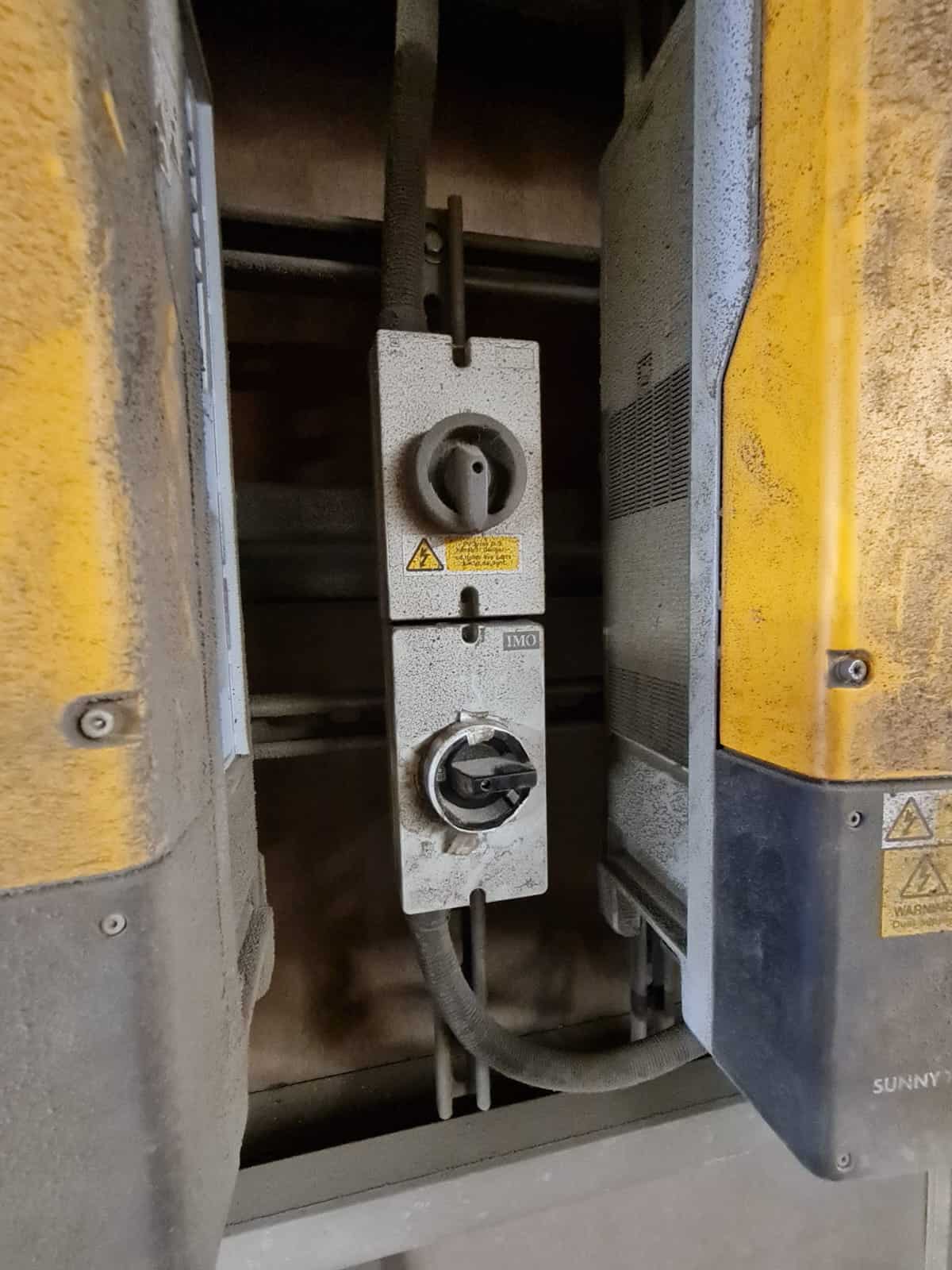
IMAGE TAKEN ON SITE BY SJG ELECTRICAL & SECURITY
Specialist PV Testing and Diagnostic Equipment
A meaningful PV safety inspection needs to go beyond simply looking at the panels from ground level.
SJG Electrical has invested in specialist solar PV testing and diagnostic equipment that enables our electricians to carry out appropriate electrical tests and investigate the condition of the installation.
Depending upon the system, accessibility and scope of the audit, assessment may incorporate a combination of:
Visual Inspection: Checking accessible components, cabling, connectors, isolators, inverter equipment, labelling, cable routes and the general standard of installation.
Electrical Testing: Specialist PV electrical testing can be used to investigate the electrical characteristics and condition of the installation and identify abnormalities that warrant further investigation.
Insulation Testing: Where appropriate, testing can help identify deterioration or defects affecting electrical insulation that may not be apparent from visual inspection alone.
Polarity and Electrical Checks: Checking important electrical characteristics of the PV strings and associated installation.
Thermal Investigation: Where appropriate and under suitable operating conditions, thermal diagnostic techniques can help identify abnormal heating that could indicate defective components or connections.
Connector and Cable Inspection: Particular attention is given to the condition, compatibility, termination and installation of accessible DC connectors and cabling.
Isolation Arrangements: Assessment of the means provided to isolate relevant parts of the PV installation.
The precise tests undertaken will depend upon the design, size, type, accessibility and condition of the PV installation.
Think of It as an MOT for Your Solar PV System
One way of understanding the SJG Solar PV System Fire Safety Audit is to compare it with an MOT.
An MOT does not guarantee that a vehicle will never subsequently develop a fault. It assesses its condition against defined requirements at the time it is inspected.
Our PV audit follows a similar principle.
We inspect and test the solar PV installation to establish its condition at the time of the audit and identify defects or concerns requiring attention.
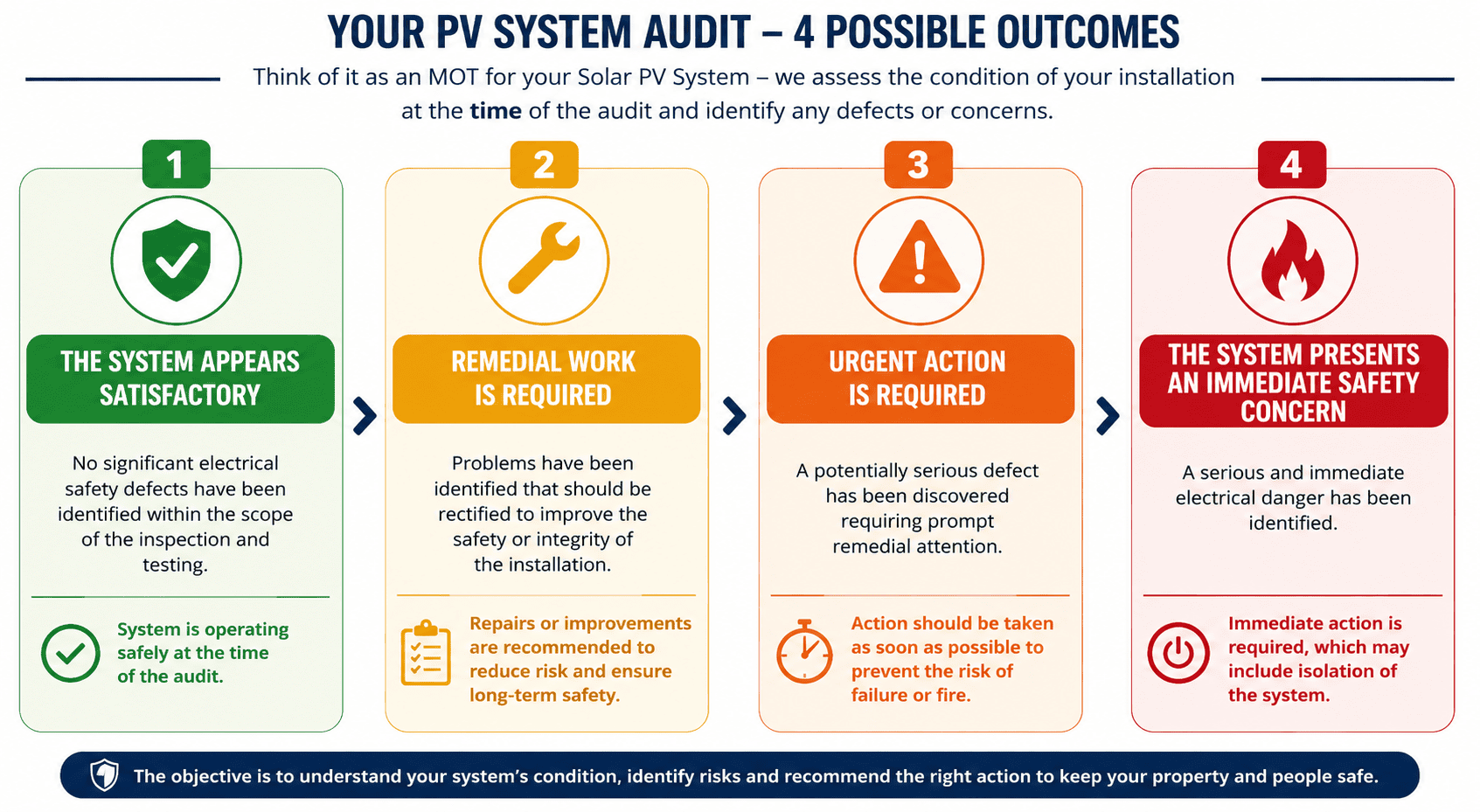
The resulting findings can broadly help establish whether:
The System Appears Satisfactory: No significant electrical safety defects have been identified within the scope of the inspection and testing.
Remedial Work Is Required: Problems have been identified that should be rectified to improve the safety or integrity of the installation.
Urgent Action Is Required: A potentially serious defect has been discovered requiring prompt remedial attention.
The System Presents an Immediate Safety Concern: Where a serious and immediate electrical danger is identified, SJG will explain the issue and advise on the appropriate safety action, which may include isolation of affected equipment where necessary and appropriate.
The objective is not simply to pass or fail a solar installation. It is to understand its condition, identify risks and provide clear recommendations for any work required.
What Does the PV System Fire Safety Audit Cover?
The exact scope will depend upon the individual installation, but the SJG audit can consider areas including:
- Solar Panels: Visual condition and evidence of obvious physical damage or deterioration where accessible.
- DC Cabling: Cable condition, routing, support, protection and evidence of abrasion, deterioration or damage.
- DC Connectors: Condition, suitability, compatibility and signs of incorrect installation or deterioration where accessible.
- DC Isolation: Provision, location, condition and suitability of accessible isolation equipment.
- Inverter Installation: General installation condition, connections, location and signs of deterioration or overheating.
- AC Electrical Connection: Inspection of the relevant accessible electrical connection between the PV system and the property’s electrical installation.
- Electrical Protection: Assessment of relevant protective devices associated with the PV installation.
- Earthing and Bonding: Assessment where applicable to the design of the installation.
- Labelling and Identification: Checking that important PV equipment and isolation points are appropriately identified.
- Cable Entry Points and Enclosures: Looking for deterioration, inappropriate installation and potential water ingress.
- Electrical Testing: Appropriate specialist testing based upon the configuration and accessibility of the PV system.
- Thermal Assessment: Where appropriate and conditions permit, investigation for abnormal heating.
- Emergency and Isolation: Considerations: Reviewing how the PV installation can be identified and appropriately isolated.
Older Solar Installations Can Deserve Particular Attention
If your solar panels have been installed for many years, the original installation may pre-date current guidance, equipment and installation practices.
Components can also deteriorate with age and environmental exposure.
An older system isn’t automatically unsafe, but age provides a good reason to understand its present condition rather than assuming that because it has operated without an obvious problem it remains safe.
This is particularly relevant where:
- The original installer no longer exists
- Installation records have been lost
- The installer is unknown
- The system has never received a detailed inspection
- Panels or inverters have subsequently been replaced
- Electrical work has been modified
- The property has changed ownership
- There is uncertainty about the components originally used
Poor Installation May Not Become Apparent for Years
Installation defects do not always result in immediate failure.
- A poorly routed cable, for example, may take years to deteriorate sufficiently for the insulation to become compromised.
- A connection may gradually deteriorate through repeated heating and cooling cycles.
- Water ingress can occur progressively.
- Cables and components exposed to weather can deteriorate over time.
This means that a system installed several years ago may have generated electricity apparently successfully throughout that period while defects have gradually developed.
“It has worked for ten years without a problem” is not the same as confirming that the installation remains electrically safe today.
Has Your Insurance Company Requested a Solar PV Inspection?
Insurers and risk-management specialists are increasingly paying attention to the risks associated with renewable-energy installations.
If your insurer, insurance broker, property surveyor, landlord, lender or risk-management adviser has requested that your solar PV system is inspected, SJG Electrical can discuss the inspection requirements with you.
This may be particularly relevant to:
- Farms and agricultural buildings
- Warehouses
- Manufacturing facilities
- Workshops
- Offices
- Retail premises
- Schools and community buildings
- Commercial property portfolios
- Landlords
- Industrial buildings
- Buildings containing valuable plant, stock or equipment
If an insurer has provided specific inspection requirements, send these to SJG Electrical when requesting your quotation so that we can establish the required scope before the inspection takes place.

AI-generated image for illustrative purposes only
Commercial and Agricultural Solar PV Fire Safety Audits
For businesses, the consequences of a PV-related electrical fault can extend considerably beyond physical damage to the solar installation.
A significant incident could potentially affect:
- Buildings – including expensive industrial or agricultural premises.
- Stock and equipment – where substantial values may be concentrated within a single building.
- Business continuity – disruption following a fire can continue long after the immediate incident.
- Employees and visitors – electrical safety is an important part of managing workplace risk.
- Insurance – insurers may request evidence relating to the inspection, maintenance or condition of electrical installations.
- Investment – a PV installation represents a substantial asset that should be appropriately maintained and inspected.
The Electricity at Work Regulations 1989 also require electrical systems used at work to be maintained, so far as is reasonably practicable, to prevent danger.
A specialist PV inspection can therefore form part of a wider electrical maintenance and risk-management strategy.
Domestic Solar PV Fire Safety Audits
The service isn’t restricted to large commercial installations.
SJG Electrical can also inspect domestic solar PV systems throughout Lincolnshire and Cambridgeshire.
A domestic audit may be particularly worthwhile if:
- You have purchased a property with existing solar panels
- You don’t know who installed the system and you have no installation documentation
- The installer has ceased trading
- The system is several years old and you are concerned about the quality of the installation
- Electrical alterations have subsequently been made
- You have noticed damaged cables or components
- You have experienced unexplained inverter faults
- Your insurer has requested an inspection
- You simply want greater confidence in the electrical safety of your installation
Buying a house with solar panels means you are also acquiring an electrical generating system. If its history is unknown, establishing its condition can provide valuable information about the installation you now own.
What Happens If We Find a Problem?
Finding a defect does not necessarily mean that the entire PV installation needs replacing.
Depending upon the problem, remedial work could involve replacing individual components, correcting connections, improving cable routing, replacing damaged cabling, addressing isolation arrangements or undertaking other appropriate electrical repairs.
SJG Electrical will explain the significance of the defects identified and recommend appropriate action.
Where defects require remedial work, these can be clearly prioritised according to their significance.
Where an immediate electrical danger is identified, appropriate action can be taken or recommended to make the installation safe.
What Will I Receive Following the Audit?
Following the inspection, SJG Electrical will provide clear information about the condition of the PV installation within the agreed scope of the audit.
The findings should enable you to understand:
- What has been inspected and tested
- Whether significant defects have been identified
- Where defects or concerns are located
- The significance of identified problems
- Whether remedial work is recommended
- Whether urgent action is required
- Whether further investigation is necessary
This provides useful evidence for property owners, facilities managers, landlords, businesses and, where appropriate, insurers or insurance brokers.
Solar PV Fire Safety Audit vs Solar Panel Servicing
These are not necessarily the same thing.
Routine solar maintenance may concentrate on matters such as panel cleanliness, inverter operation and energy generation.
The SJG PV System Fire Safety Audit is specifically focused on electrical condition, installation quality and potential safety and fire-risk issues.
A system producing its expected number of kilowatt-hours can still have an electrical defect.
For that reason, performance monitoring should not be regarded as a substitute for appropriate electrical inspection and testing.
Solar PV Fire Safety Audit vs EICR
An Electrical Installation Condition Report (EICR) and a specialist PV system inspection also have different purposes.
An EICR assesses the condition of a property’s fixed electrical installation within its defined scope.
A solar PV system incorporates specialist DC equipment, generation circuits, modules, connectors, cabling, inverters and isolation arrangements.
A dedicated PV inspection therefore allows attention to be concentrated specifically on the solar installation and the risks associated with it.
If you are unsure which inspection you require, SJG Electrical can discuss the installation and recommend an appropriate approach.
When Should You Consider a PV System Fire Safety Audit?
You should consider arranging an inspection if:
- Your insurer or broker has requested one
- Your PV installation has never been independently inspected
- The original installer is no longer trading
- You are uncertain who installed the system
- The installation is several years old
- You have inherited the system when purchasing a property
- Documentation is incomplete or unavailable
- You have concerns about workmanship
- Cables appear loose, damaged or poorly routed
- Connectors or electrical components show signs of deterioration
- The inverter regularly reports faults
- Alterations have been made to the original installation
- You manage a commercial, industrial or agricultural property where fire could cause substantial disruption or loss
You do not need to wait until the solar system stops generating before having it inspected.

Don’t Assume That Because Your Solar Panels Are Working, They Are Safe
A solar PV installation can continue generating electricity despite damaged cables, unsuitable connectors, poor connections or other potentially significant electrical defects.
Those problems may remain hidden until the installation is properly inspected and tested.
Whether you are responding to an insurance request, assessing an older installation, purchasing a property with existing solar panels or simply want to understand the condition of your system, the SJG Electrical PV System Fire Safety Audit provides a specialist assessment of your installation’s electrical safety.
Book a Solar PV System Fire Safety Audit
If you own or manage a property with solar panels in Lincolnshire or Cambridgeshire, contact SJG Electrical to discuss your installation.
Tell us approximately when the PV system was installed, the size of the installation if known and whether the inspection has been requested by an insurer.
Don’t wait for a PV system to stop working before asking whether it is safe.
Request a PV System Fire Safety Audit from SJG Electrical.
Solar PV Fire Safety
Frequently Asked Questions
Answers to some of the most common questions about Solar PV System Fire Safety Audits.
Can solar panels be working normally but still be unsafe?
Yes. Electricity generation alone does not establish the electrical safety of the complete installation. Problems with cabling, connectors, isolation equipment or other components may exist without immediately stopping generation.
Can a faulty solar PV system cause a fire?
Electrical faults within PV installations can create fire risks. Potential issues include poor connections, damaged cables, defective components and other electrical faults. Correct installation, inspection and maintenance are therefore important.
Why are insurers interested in solar PV inspections?
Solar installations introduce additional electrical equipment and DC generation to a property. Insurers and risk-management organisations increasingly recognise the importance of appropriate inspection and maintenance as part of managing electrical and fire risks.
Does switching off the electricity make solar panels safe?
Not necessarily. Solar panels generate DC electricity when exposed to sufficient light. The design and isolation arrangements of the PV system therefore need to be understood before work is undertaken.
What if my original solar installer has gone out of business?
This is one of the situations in which an independent inspection can be particularly valuable. SJG Electrical can assess the existing installation regardless of whether the original installer is still trading.
Do you inspect domestic solar panels?
Yes. The PV System Fire Safety Audit is available for domestic installations as well as commercial, agricultural and industrial PV systems throughout Lincolnshire and Cambridgeshire.
My solar monitoring app shows everything is working. Do I still need an inspection?
Monitoring information is useful for identifying generation and some operational faults, but it cannot necessarily identify every electrical or installation defect. A system can continue generating despite certain safety-related problems.
Can you inspect an older solar PV installation?
Yes. Older systems are an important application for the service, particularly where the installation history is unclear or the original installer is no longer available.
Can SJG carry out repairs if the audit finds a problem?
Where remedial electrical work is required, SJG Electrical can explain the defects identified and advise on the appropriate corrective work.
Can I use the audit for my insurance company?
If an insurer has requested an inspection, provide SJG Electrical with the insurer’s specific requirements before the audit. This allows us to establish whether the proposed inspection and reporting scope meets what your insurer has requested.
How often should a solar PV system be inspected?
The appropriate inspection frequency depends upon the type, age, environment, use and condition of the installation and any requirements imposed by the property owner, duty holder or insurer. Commercial installations should also be considered as part of the organisation’s wider electrical maintenance regime.
Do you provide PV Fire Safety Audits outside Lincolnshire and Cambridgeshire?
This particular SJG Electrical service is focused on Lincolnshire and Cambridgeshire, enabling us to provide a specialist local service to homeowners and organisations throughout the two counties.


